
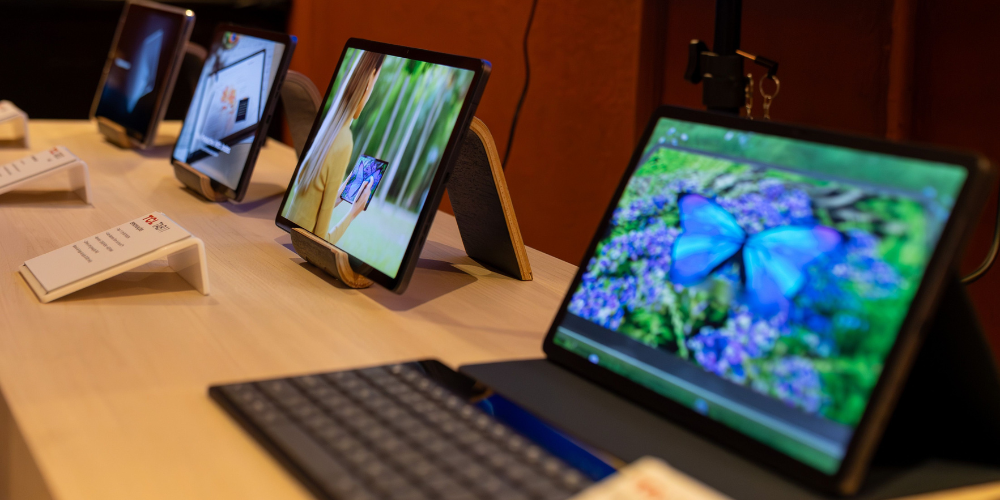
How Tech Product Launches Are Planned and Presented
Tech product launches have become major events in the business world. Companies no longer introduce new products through simple press releases or product pages. Instead, they create large-scale presentations designed to capture attention from investors, developers, customers, and the media.
Over the past month alone, Apple shared updates to Siri, Google introduced new search agents capable of completing tasks on behalf of users, and Nvidia presented a new chip designed for personal computers. Each announcement took center stage during a developer conference.
These events are not limited to industry giants. Enterprise software companies such as SAP host Sapphire, Oracle runs Oracle AI World, and companies like Salesforce and Stripe organize roadshows across multiple countries.
While these gatherings help communicate product plans and company direction, they have also developed a highly recognizable formula that appears across much of the technology industry.
Why Product Launch Events Matter

Instagram | dreamesg | Product launches give investors, developers, and customers a clear look into a company’s future.
Product launch events serve several important purposes. They give investors insight into future products, provide developers with information about upcoming tools, and help customers understand where a company is headed.
They also create fixed deadlines for internal teams. When a launch date is placed on the calendar, product groups must prepare demonstrations, updates, and announcements on schedule.
Occasionally, these events have a lasting impact. Apple’s introduction of the iPhone in 2007 remains one of the most influential product launches in modern technology history.
Yet despite their importance, many conferences follow a remarkably similar structure.
The Standard Stage Formula
The presentation style rarely changes. Speakers often pass control to one another using nearly identical phrases.
“And now here’s Kevin.”
“To tell you more about that, over to John.”
As one presenter exits, electronic background music fills the room. Apple uses pre-recorded videos rather than live stage transitions, but the concept remains the same. The camera simply shifts to another executive waiting somewhere on the company’s Cupertino campus.
The visual presentation follows a familiar pattern as well. Speakers typically wear open-collar shirts, dark pants, and shoes featuring white cushioned soles. Formal business attire is almost absent.
The exception is customer representatives from highly regulated industries such as banking. Their role is to demonstrate adoption within traditional sectors, and their appearance often reflects that purpose.
One unwritten rule seems universal: no ties. If someone is wearing a tie, there is a good chance that person works in security rather than product development.
The Carefully Rehearsed Presentation Style
Once on stage, presenters usually walk confidently to their mark, stop, and wait for the music to end.
Many begin with a simple reaction: “Wow!”
The presentation then proceeds according to a carefully practiced script displayed on a teleprompter.
Body language tends to follow predictable patterns. Speakers frequently raise their hands as if holding an invisible box. Occasionally, both hands extend outward, creating gestures that resemble holding objects in each palm. After a few minutes, they move to another section of the stage and repeat the same sequence.
Whether introducing a major technological breakthrough or a minor design update, presenters often describe themselves as “super-excited.” The delivery remains enthusiastic regardless of the announcement itself, making revolutionary developments and small product changes sound remarkably similar.
The Corporate Comfort Zone
Modern product launches operate as highly controlled environments. Every moment is rehearsed, scripted, and polished.
Customer appearances follow the same structure. Representatives are commonly asked questions such as:
“How excited are you by our partnership?”
“Why is your company so great?”
Product demonstrations are equally choreographed. On-stage demo stations frequently showcase technology functioning perfectly under ideal conditions, creating an experience that feels more like a performance than a live test.

Instagram | dreamesg | On-stage product demos act more like carefully rehearsed performances than genuine, live technical tests.
Audience participation can become awkward. After a significant announcement, a presenter may pause briefly, appearing to invite applause. Light clapping often begins. Then uncertainty follows. The presenter waits. The audience stops. Silence returns.
Many executives attempt to connect product features with everyday life. Demonstrations often revolve around preparing meals, organizing schedules, or purchasing gifts.
The goal is clear: present technology leaders as ordinary consumers who use the same tools as everyone else.
Yet the examples sometimes produce the opposite effect. Instead of appearing relatable, they can feel disconnected from how most people interact with technology. The stories often resemble controlled product tests rather than genuine daily experiences.
Where Individuality Disappears
One of the more interesting contradictions of tech launch events is the messaging itself.
Presenters frequently discuss human creativity, personal achievement, and the unique potential of every individual. They demonstrate tools designed to help people communicate, collaborate, and build stronger connections.
At the same time, the speakers often follow nearly identical scripts, gestures, clothing choices, and presentation styles.
As a result, individuality becomes part of the message but rarely part of the performance.
Technology product launches remain one of the industry’s most influential communication tools. They help companies showcase innovation, establish timelines, and shape public perception. At the same time, many events rely on an established formula built around scripted transitions, carefully managed demonstrations, coordinated enthusiasm, and highly polished presentations.
Whether the speaker is Kevin, John, Rohan, or Mike, the experience often follows the same path. One presenter exits, another enters, the music starts again, and the cycle continues—usually beginning with a familiar word: “Wow!”
More in Tech
-
`
 Humans May Soon Live and Work on the Moon, Says Space Tech CEO
The idea of humans living beyond Earth is moving from speculation to near-term planning. According to space industry leaders, the Moon...
May 6, 2026 -
`
 This 100,000-Year-Old Cave Reveals a Shared Life Between Humans and Neanderthals
Roughly 100,000 years ago, a cave in the Levant became home to an unexpected social experiment. Evidence from Tinshemet Cave shows...
April 30, 2026 -
`
 Iran Plans Crypto Toll for Oil Tankers Crossing Strait of Hormuz During Ceasefire
Tensions around the Strait of Hormuz have taken a new turn as Iran signals tighter control over one of the world’s...
April 22, 2026 -
`
 How to Plan a Safe and Fun Vacation With Your Pet
Travel plans can feel incomplete when pets are left behind. Many travelers now choose to bring their dogs or cats along...
April 15, 2026 -
`
 Why Elon Musk Was Left Out of Trump’s “Tech Bro” Council
President Donald Trump recently announced a new advisory council focused on science and technology, bringing together some of the most influential...
April 8, 2026 -
`
 What Is Workplace Culture? Understanding Its Meaning & Importance
“Workplace culture” is a term frequently seen in job postings, company websites, and professional conversations. Despite its prevalence, it’s often misunderstood...
April 1, 2026 -
`
 Why Surging Oil Prices Won’t Spark a U.S. Inflation Nightmare
Rising oil prices have rattled financial markets and raised fresh concerns about inflation across the United States. Since the start of...
March 25, 2026 -
`
 This 112-Acre Florida Island Inspired Jimmy Buffett’s ‘Cheeseburger in Paradise’
Off the southwest coast of Florida sits a small island that feels refreshingly untouched by modern development. Cabbage Key may be...
March 16, 2026 -
`
 The Group Chat Rules Nobody Talks About (But You Should Follow)
Group chats have quietly reshaped daily communication. Plans for dinner, updates about a child’s birthday, collaboration on a work project, and...
March 9, 2026
More From Todaysnyc
-
 Here’s How the Astor Is Reimagining Dining at New York’s Public Theater
A new restaurant is reshaping the dining space inside New York’s Public Theater. The Astor opens Tuesday, September 15, at 425...
Luxury & Life StyleSeptember 29, 2026 -
 Microsoft Introduces New AI Privacy Rules for Schools
AI use in schools is facing closer scrutiny as districts, parents, and educators ask how student data should be handled. Microsoft...
TechSeptember 22, 2026 -
 Why New York City Holds a Special Place in Emmy Rossum’s Life
Emmy Rossum has a personal connection to New York City that goes far beyond being the place where she grew up....
CultureSeptember 15, 2026 -
 Union Square Sees Surging Interest in Office and Retail Space
Union Square is seeing a notable rise in demand for office and retail space, with new leases filling several major properties...
BusinessSeptember 8, 2026 -
 Mike Brown Spotted With Wife on Italian Vacation After Knicks Win
Mike Brown is enjoying a quieter stretch after a landmark first season with the New York Knicks. The coach was recently...
Luxury & Life StyleSeptember 1, 2026
You must be logged in to post a comment Login