Why Colleges Across the US Are Facing a Financial Turning Point
American colleges and universities are entering a period of significant financial and structural change.
Declining student enrollment, reduced federal funding, stricter student loan rules, and changing workforce expectations are putting long-standing higher education practices under pressure. Institutions that once relied on predictable enrollment growth and rising tuition now face a very different reality.
Recent developments suggest that the business model supporting higher education for decades is becoming less dependable, forcing colleges to reconsider how they attract students, design academic programs, and demonstrate value.
Colleges Are Facing a Financial Reality
Last month, J. Michael Haynie, chancellor of Syracuse University, publicly acknowledged that the university would miss its enrollment target and post its first budget deficit in years. Such admissions are uncommon among university leaders, making the announcement especially notable.
Haynie stated, “Enrollment volatility is widespread, unpredictable and the ‘new normal’ for even strong, well-resourced universities.” The statement reflects a broader challenge affecting institutions across the United States, including those with established reputations, extensive alumni networks, and substantial financial resources.
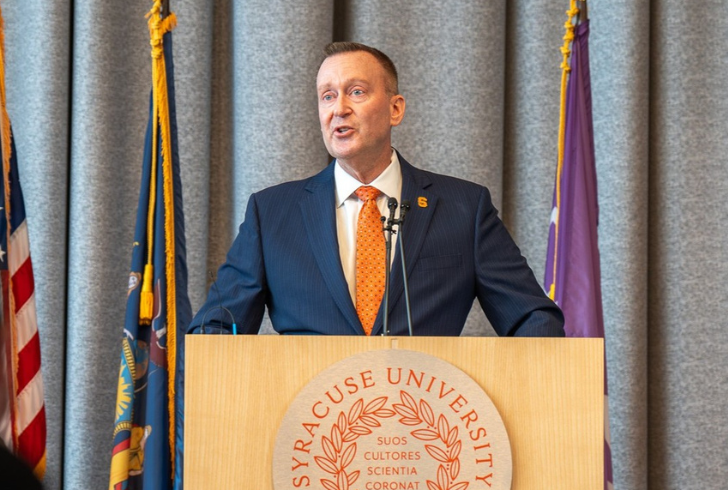
Instagram | syracuseu | The Syracuse chancellor’s public acknowledgment of a budget deficit marks a rare moment of transparency in university leadership.
A major factor behind this shift is the long-anticipated “enrollment cliff.” The graduating high school class of 2026 marks the beginning of a smaller generation of students, a trend expected to continue through the end of the next decade. The decline stems from lower birth rates following the Great Recession, and those birth rates never returned to previous levels.
As a result, colleges now compete for a shrinking pool of traditional undergraduate students.
Federal Policy Adds Pressure
Demographic challenges were already expected to affect enrollment. However, recent federal policy changes have created additional financial uncertainty for higher education.
Since last year, the second Trump administration has eliminated thousands of research grants awarded to colleges and universities. It has also proposed major reductions in remaining research funding while tightening student visa policies. As a result, enrollment among new international students at American universities has fallen by more than one-third, representing the largest annual decline outside the COVID-19 pandemic.
These developments have reduced important revenue sources for many institutions, leading universities to lower spending, reconsider budgets, and search for alternative income streams.
Another major change arrived on July 1, when provisions of the One Big Beautiful Bill Act took effect. The legislation introduced new restrictions on federal student borrowing, particularly for graduate education.
Graduate students can no longer borrow up to the full cost of attendance. Instead, most graduate borrowers are limited to $20,500 per year, with a maximum borrowing limit of $100,000 for an entire degree. Students enrolled in government-designated professional programs, including law and selected medical fields, may borrow up to $50,000 annually, with a lifetime cap of $200,000. Parent borrowing also faces tighter restrictions, limiting loans to $20,000 per undergraduate student each year, with a total lifetime limit of $65,000.
Because graduate enrollment has supported college growth in recent years, these borrowing limits could significantly affect future enrollment patterns and institutional revenue.
Why Enrollment Is Falling
Many colleges continue treating enrollment declines as a marketing or recruitment issue. However, the challenge extends far beyond admissions.
The number of traditional college-age students is decreasing, while fewer high school graduates choose college immediately after graduation. Immediate college enrollment dropped from 70% in 2016 to approximately 62% in 2022, highlighting changing student priorities.

Freepik | Affordability and academic relevance have become critical factors influencing today’s college enrollment decisions.
Although higher education remains financially valuable, many students question whether current college experiences justify rising costs. Individuals with advanced degrees generally earn higher salaries and experience stronger employment outcomes than those without degrees. Yet affordability concerns and doubts about academic relevance continue influencing enrollment decisions.
Many students leave college or decide against attending because financial pressures combine with uncertainty about how classroom learning connects to future careers.
Aligning Programs With Careers
Modern students increasingly expect education to provide practical value alongside academic learning. Colleges therefore need stronger connections between coursework and real-world employment opportunities.
Work-integrated learning can play an important role through cooperative education programs, meaningful campus employment, internships, and employer-sponsored projects focused on real business challenges. This approach does not reduce higher education to job training. Instead, it creates a clearer relationship between academic study and career preparation.
At the same time, colleges may need to reconsider how academic offerings are structured. Instead of measuring growth by continually adding majors, graduate programs, research centers, or new buildings, institutions may need to evaluate which programs continue meeting student demand and labor market needs.
Shorter educational pathways, including certificates, two-year programs, and applied credentials, should become integrated parts of higher education rather than being viewed as alternatives to traditional degrees.
Growth Through Adult Learners
Another area receiving greater attention is adult education.
Approximately 43 million Americans have earned college credits without completing a degree. Many of these former students eventually return, and more than one-third re-enroll at the last institution they attended. That creates a substantial opportunity for colleges to reconnect with their own former students.
In addition, millions of college graduates now require updated skills as artificial intelligence, automation, and changing employer expectations reshape the labor market.
Despite these trends, many colleges still focus primarily on full-time residential students between 18 and 22 years old. While that demographic remains important, it is unlikely to provide enough enrollment growth to sustain the existing financial model.
Adult learners often require flexible schedules, career-focused programs, and online learning options that fit work and family responsibilities.
The Rise of Online Education

Pexels | A quarter of college students now study fully online by choice, cementing a permanent shift in education.
During the COVID-19 pandemic, many expected students to abandon online education once campuses fully reopened. Instead, online learning has become a standard part of higher education.
Today, approximately one-quarter of college students are enrolled exclusively in online programs. That shift reflects changing student preferences rather than a temporary response to campus closures.
Institutions hoping to reach adult learners, working professionals, and students balancing multiple responsibilities will likely need to continue expanding high-quality online education rather than treating it as a secondary option.
Students Want Clear Evidence of Value
Families now expect colleges to provide clear evidence of value before making a major financial investment. General claims about lifetime earning potential are no longer enough. Instead, prospective students want program-specific data, including graduate salaries, average student debt, internship opportunities, career support, and employment outcomes after graduation.
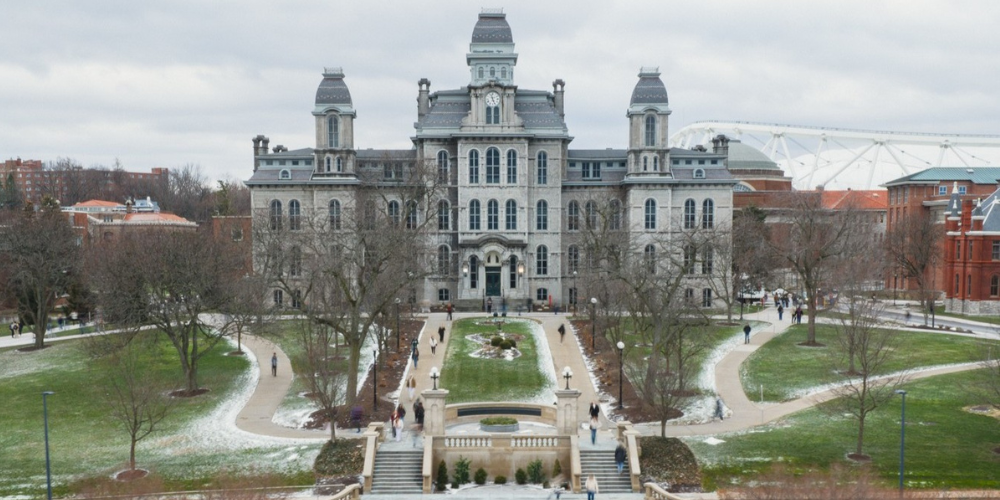
Syracuse University’s announcement attracted attention because it came from a nationally recognized institution with substantial resources. If enrollment uncertainty can affect a university of that scale, similar financial pressures can impact colleges across the country.
American higher education is not disappearing, but the financial model that fueled decades of expansion is becoming less dependable. Shrinking enrollment, reduced funding, and changing student expectations are reshaping the sector.
Colleges that adapt by expanding flexible learning, aligning academic programs with workforce demand, strengthening career preparation, and improving transparency about student outcomes will be better prepared for the years ahead.
More in Business
-
`
 What Is Workplace Culture? Understanding Its Meaning & Importance
“Workplace culture” is a term frequently seen in job postings, company websites, and professional conversations. Despite its prevalence, it’s often misunderstood...
April 1, 2026 -
`
 Why Surging Oil Prices Won’t Spark a U.S. Inflation Nightmare
Rising oil prices have rattled financial markets and raised fresh concerns about inflation across the United States. Since the start of...
March 25, 2026 -
`
 This 112-Acre Florida Island Inspired Jimmy Buffett’s ‘Cheeseburger in Paradise’
Off the southwest coast of Florida sits a small island that feels refreshingly untouched by modern development. Cabbage Key may be...
March 16, 2026 -
`
 The Group Chat Rules Nobody Talks About (But You Should Follow)
Group chats have quietly reshaped daily communication. Plans for dinner, updates about a child’s birthday, collaboration on a work project, and...
March 9, 2026 -
`
 How the Bay Area Skate Culture Started
For those who grew up in the 1980s, Friday nights often meant the roller rink: dimmed lights, pulsing music, and skaters...
March 5, 2026 -
`
 $2 Million Raised in 2 Days for James Van Der Beek’s Family on GoFundMe
The passing of James Van Der Beek at 48 prompted an immediate surge of public support. A GoFundMe campaign set up...
February 25, 2026 -
`
 How to Plan a Hawaii Vacation Without Stress or Overspending
Planning a trip to Hawaii can feel overwhelming, but it doesn’t have to be complicated. With the right approach, travelers can...
February 19, 2026 -
`
 $42 Million Tahoe Estate Finally Bought by Tech Mogul After 8 Years on the Market
A long-standing lakefront listing on the Nevada side of North Lake Tahoe has finally changed hands, drawing attention across real estate...
February 12, 2026 -
`
 Why “The Traitors” Is Every Pop Culture Card Collector’s Dream
Reality TV rarely sparks interest in collectibles, yet The Traitors has emerged as an exception. Set in a haunting Scottish castle,...
February 4, 2026
More From Todaysnyc
-
 Why NYC’s Subway Heat Is a Problem
New York City subway stations can become painfully hot during the summer. Now, city and state officials are studying whether that...
TechAugust 25, 2026 -
 Jason Sudeikis’ Mail Leads NYC Woman to “Ted Lasso” Premiere Meeting
A surprising piece of mail turned into an unexpected Hollywood connection for a New York City resident. Mental health counselor and...
CultureAugust 18, 2026 -
 Mamdani’s Red Tape Cuts Bring New Support for NYC’s Local Businesses
New York City’s small business owners are facing a major change in how they handle permits, fees, and government regulations. Mayor...
BusinessAugust 11, 2026 -
 Chelsea Handler’s Family Vacation Rules Spark Celebrity Reactions
Family vacations often create lasting memories, but they can also test patience when expectations are unclear. Comedian Chelsea Handler recently sparked...
Luxury & Life StyleAugust 4, 2026 -
 Police Urge Parents to “Talk to Your Kids” About Online Safety
Technology has become a constant part of daily life, making online safety a growing concern for families. As children spend more...
TechJuly 28, 2026
You must be logged in to post a comment Login