
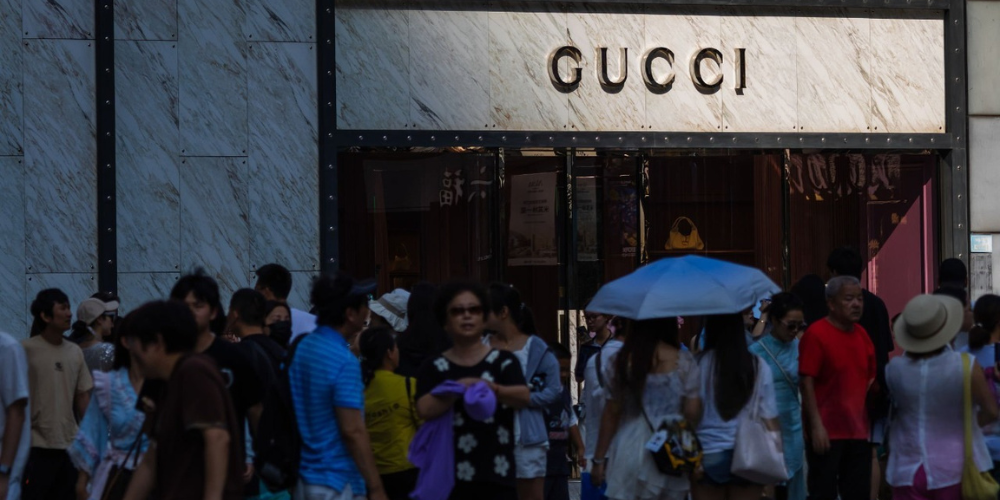
Why the Luxury Market Is Expected to Return to Growth in 2026
After a prolonged slowdown, the luxury goods industry is showing early signs of recovery. Consumers are gradually returning to purchases of premium apparel, handbags, jewelry, and beauty products, even as geopolitical tensions continue to shape the global economy.
According to a new semi-annual report from Bain & Company released on Thursday, the sector is expected to return to growth in 2026 after two consecutive years of decline.
Luxury Market Expected to Grow in 2026
Bain forecasts global sales of personal luxury goods to increase between 2% and 4% in 2026. The market is projected to reach between 365 billion euros and 373 billion euros ($415 billion to $424 billion), up from 358 billion euros last year.
The recovery is likely to be driven by the Americas, where several U.S. luxury brands reported first-quarter sales growth of up to 15%. The report suggests that consumer demand remains resilient despite economic and political uncertainty in many regions.

Pexels | Earth Photart | Despite global economic uncertainty, US luxury spending is bouncing back with impressive strength.
Claudia D’Arpizio, Bain partner and co-author of the study, highlighted a shift in consumer priorities. “People are still alive and want to live better lives,” she said. “So there is this mega trend of looking for a good quality of life, of improving their lives and finding the meaning and living the experiences that is stronger than the fear of the future.”
The luxury sector faced challenges after years of aggressive price increases, which pushed many buyers away. Now, brands are stabilizing prices and introducing more accessible entry-level products, helping attract customers back to the market.
D’Arpizio described the current environment as “a healthier situation vis-à-vis two years ago.” At the same time, she noted that luxury companies still need to rebuild trust and reconnect with shoppers after what she called a period in which “customer love” had weakened.
Regional Trends Shaping Growth
Bain’s base-case forecast assumes that conflicts in the Middle East remain contained, local spending offsets uneven tourism activity, and demand in China steadily improves. Under this scenario, growth should remain modest but positive.

Pexels | Thành Văn Đình | Younger American consumers under 35 are fueling growth in the casual luxury, jewelry, and beauty sectors.
The report also outlines alternative outcomes. Luxury sales could remain flat if geopolitical risks intensify. On the other hand, easing tensions and stronger-than-expected growth in China could push the sector’s expansion to as much as 6%.
In the United States, younger consumers under 35 are driving demand, particularly for casual luxury fashion, jewelry, and beauty products. China is also expected to return to growth, supported by online sales of ready-to-wear fashion. Europe, meanwhile, continues to face pressure from weaker tourism linked to geopolitical concerns.
The latest Bain outlook points to a cautious but meaningful turnaround for the luxury industry. While global uncertainty remains a factor, many consumers continue to prioritize quality products and experiences.
As D’Arpizio noted, “People want to live a normal life,” a sentiment that appears to be helping the luxury market regain momentum heading into 2026.
More in Luxury & Life Style
-
`
 Why Surging Oil Prices Won’t Spark a U.S. Inflation Nightmare
Rising oil prices have rattled financial markets and raised fresh concerns about inflation across the United States. Since the start of...
March 25, 2026 -
`
 This 112-Acre Florida Island Inspired Jimmy Buffett’s ‘Cheeseburger in Paradise’
Off the southwest coast of Florida sits a small island that feels refreshingly untouched by modern development. Cabbage Key may be...
March 16, 2026 -
`
 The Group Chat Rules Nobody Talks About (But You Should Follow)
Group chats have quietly reshaped daily communication. Plans for dinner, updates about a child’s birthday, collaboration on a work project, and...
March 9, 2026 -
`
 How the Bay Area Skate Culture Started
For those who grew up in the 1980s, Friday nights often meant the roller rink: dimmed lights, pulsing music, and skaters...
March 5, 2026 -
`
 $2 Million Raised in 2 Days for James Van Der Beek’s Family on GoFundMe
The passing of James Van Der Beek at 48 prompted an immediate surge of public support. A GoFundMe campaign set up...
February 25, 2026 -
`
 How to Plan a Hawaii Vacation Without Stress or Overspending
Planning a trip to Hawaii can feel overwhelming, but it doesn’t have to be complicated. With the right approach, travelers can...
February 19, 2026 -
`
 $42 Million Tahoe Estate Finally Bought by Tech Mogul After 8 Years on the Market
A long-standing lakefront listing on the Nevada side of North Lake Tahoe has finally changed hands, drawing attention across real estate...
February 12, 2026 -
`
 Why “The Traitors” Is Every Pop Culture Card Collector’s Dream
Reality TV rarely sparks interest in collectibles, yet The Traitors has emerged as an exception. Set in a haunting Scottish castle,...
February 4, 2026 -
`
 Venezuela Opens Oil Industry to Foreign Investment, Seeks Warmer US Ties
Venezuela is entering a new political phase under acting President Delcy Rodríguez, who used her first state of the union address...
January 28, 2026
More From Todaysnyc
-
 Jason Sudeikis’ Mail Leads NYC Woman to “Ted Lasso” Premiere Meeting
A surprising piece of mail turned into an unexpected Hollywood connection for a New York City resident. Mental health counselor and...
CultureAugust 18, 2026 -
 Mamdani’s Red Tape Cuts Bring New Support for NYC’s Local Businesses
New York City’s small business owners are facing a major change in how they handle permits, fees, and government regulations. Mayor...
BusinessAugust 11, 2026 -
 Chelsea Handler’s Family Vacation Rules Spark Celebrity Reactions
Family vacations often create lasting memories, but they can also test patience when expectations are unclear. Comedian Chelsea Handler recently sparked...
Luxury & Life StyleAugust 4, 2026 -
 Police Urge Parents to “Talk to Your Kids” About Online Safety
Technology has become a constant part of daily life, making online safety a growing concern for families. As children spend more...
TechJuly 28, 2026 -
 How New York City Reflects the Story of America
Few cities spark as much admiration and criticism as New York City. For centuries, it has stood at the center of...
CultureJuly 21, 2026
You must be logged in to post a comment Login